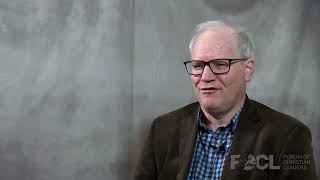
What’s Next for AI—and How Should We Respond? - Charlie Catlett


The pace of improvement in artificial intelligence (AI) has been daunting, with forecasts of transformations—some utopian, others dystopian—touching nearly every aspect of life. We already see both sides: from social platforms that amplify polarisation to vehicle safety features like automatic emergency braking. This Master Class explains how AI works, what’s coming next, and how to use it wisely and effectively in ministry and daily life—guided by biblical principles of wisdom, stewardship, truth, and love of neighbour.
This is part 5 in a 5 part series on 'A Christian Guide to Understanding and Using AI Wisely'.
Show More
5. What’s Next for AI—and How Should We Respond?
We close with a discussion about likely developments in tools, policy, and culture. We touch on discipleship, youth guidance, and a Christian framework for truth-seeking, care, and accountability.
Find more great talks like this at https://www.FOCLonline.org.
Remember to like and subscribe to see all of our talks!
Charlie Catlett is a senior computer scientist at the U.S. Department of Energy’s Argonne National Laboratory, with visiting appointments at the University of Chicago and the University of Bristol. He has focused his research for 40 years in the development of the Internet and WorldWideWeb, computer security, and high-performance computing, holding scientific leadership positions at multiple universities and national laboratories. During the past decade his research has focused on the use of computational modeling and artificial intelligence (AI) embedded with sensors to create new classes of environmental measurements and urban planning capabilities. Recently he has also used AI-based data analysis to assess community vulnerability to factors ranging from communicable disease to impacts of climate change, such as flooding and extreme temperatures. He has received numerous awards for his research and leadership, including being named to Crain’s “Tech 50” leaders in Chicago in 2014, GovTech