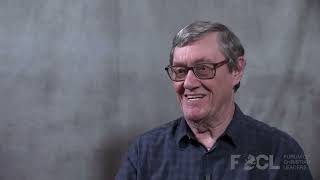
Artificial Intelligence: Applications, Ethics, and Society - Charlie Catlett


This two-part series provides a general understanding of the concepts, methods, and technologies underpinning artificial intelligence (AI), including recent innovations that have enabled entirely new capabilities. We provide examples of exciting applications as well as discuss the limitations and potential misuse of AI. A key objective is to equip ministry leaders to (a) harness new AI applications fully and appropriately and (b) bring a Christian perspective to discussions about the use of AI and its impacts on our communities and society at large.
Part two of this series provides examples of today’s AI limitations and weaknesses, with cautions regarding both deliberate and unintentional misuse of AI. The session considers how AI providers evaluate the technology’s trustworthiness, goal alignment, and ethics. This session explores how to discern what are appropriate or inappropriate uses of AI for individuals, churches, and ministries. We also discuss a range of areas where AI is influencing, or will influence, society in very visible and–perhaps more importantly–subtle, ways. Here, viewers will grapple with broader questions regarding potential impacts on society, such as in labor markets, privacy, discerning truth where our ability to trust in what we see and hear is challenged, and the sanctity and uniqueness of human life.
Show More
Find more great talks like this at https://www.FOCLonline.org.
Remember to like and subscribe to see all of our talks!
Charlie Catlett is a senior computer scientist at the U.S. Department of Energy’s Argonne National Laboratory, with visiting appointments at the University of Chicago and the University of Bristol. He has focused his research for 40 years in the development of the Internet and WorldWideWeb, computer security, and high-performance computing, holding scientific leadership positions at multiple universities and national laboratories. During the past decade his research has focused on the use of computational modeling and